
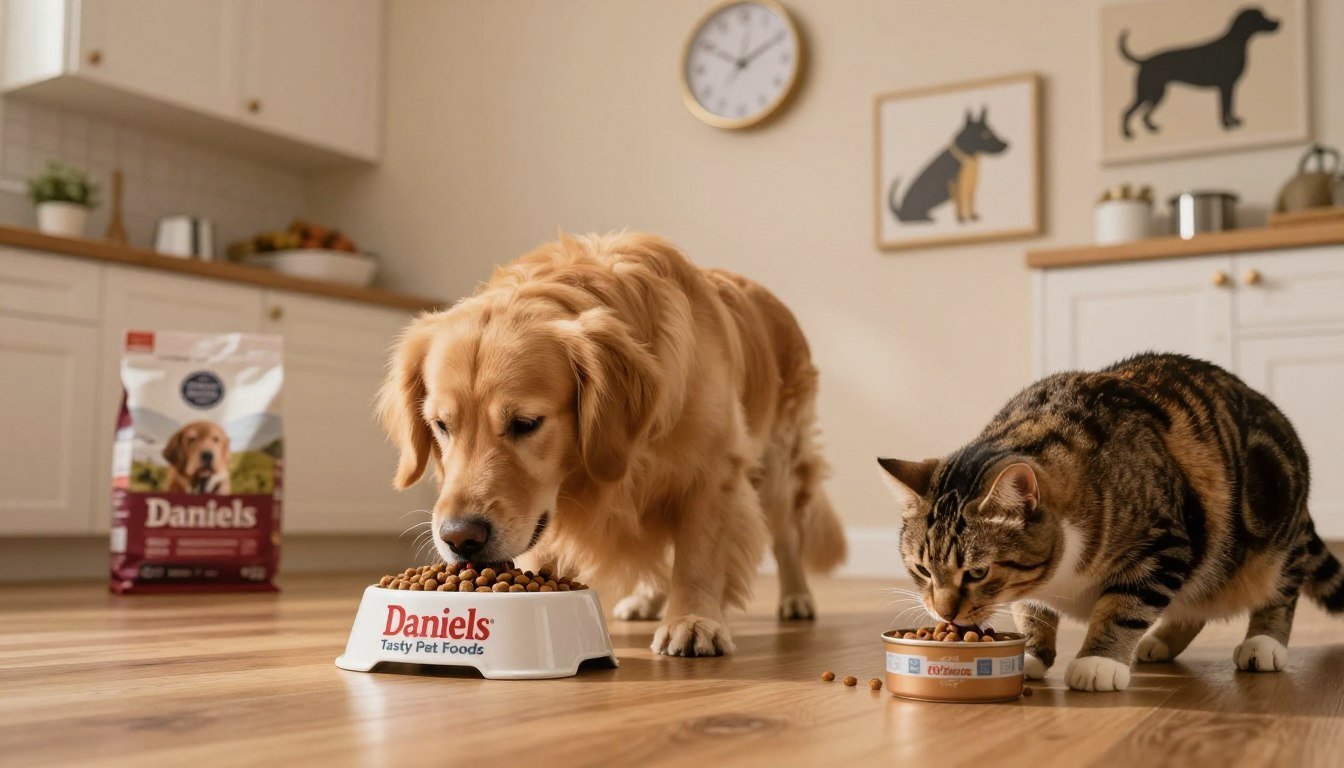
Most adult dogs do well with two meals a day, while puppies need more frequent meals as they grow. A regular feeding schedule can make daily care easier and help you notice changes in appetite or health. A body condition score is a visual and hands-on rating of your pet’s shape and fat cover that helps assess whether its weight is healthy. Meal frequency and the daily food amount are separate decisions: one sets how many meals you serve, while the other sets the total food for the day. This guide offers practical ways to choose a routine, adjust it for age and individual needs, and check that the amount suits your pet. You can make the schedule fit your household without losing sight of what works for your companion.
Key Takeaways
- Two meals a day suit most adult pets.
- Growing puppies usually need more frequent meals.
- Use the food pack’s guide to set a starting daily amount.
- Check body shape and weight as well as appetite.
- Ask your vet about changes linked to age or health.
A consistent routine is easier to manage when it fits both your pet’s needs and your household.
How Often Should You Feed a Dog?
For most adult dogs, two meals a day is a sensible starting schedule. Twice-daily feeding is the usual pattern for healthy adult dogs, though size, health and routine can affect what suits an individual.
Some small dogs do well with three meals, depending on their size, health and routine. Their breed alone does not decide the schedule, and a dog’s appetite or medical needs may matter more than its label.
Choose a schedule for the individual dog, not simply for its breed label.
Three considerations can help you decide whether the usual pattern needs adjusting:
- Some small dogs may benefit from three meals, particularly when that suits their size and routine.
- Large or deep-chested dogs should not be given one very large meal.
- A medical need may call for an individual schedule from your vet.
These exceptions do not mean every dog needs a special plan. Keep an eye on appetite, comfort and weight, and discuss persistent concerns with your vet. A feeding schedule should also work with the daily food amount your pet needs, rather than changing that total automatically. Keep the usual twice-daily routine unless your dog’s individual needs call for a change.
How Many Meals Do Puppies Need as They Grow?
Puppies need more frequent meals than adults, with the number usually reducing as they get older. Use age as the starting point for puppy feeding, then follow any individual veterinary advice.
| Puppy age | Usual meals per day |
|---|---|
| Under 12 weeks | 4 |
| From about 12 weeks to under 6 months | 3 |
| From 6 months | 2 |
| Adult dogs | 2 |
Why puppies do better with small, frequent meals
Small, frequent meals suit a puppy’s growth and smaller stomach. Several servings spread food across the day, rather than asking a young puppy to manage a large meal at once.
As puppies grow, the number of meals comes down. The age ranges in the table give you a practical feeding guide, but each puppy develops at its own pace. Keep serving a complete puppy food that is suited to its growth stage, and measure the daily food amount across its meals.
When a puppy may need an individual plan
Breed size, health and veterinary advice can affect an individual puppy’s plan. A large-breed puppy, for example, may have different nutritional needs from a smaller puppy, so ask your vet if you are unsure which food is suitable.
Illness, a poor appetite or difficulty keeping food down also deserves veterinary attention. Do not change the age schedule on your own to address a health issue; a vet can advise whether the puppy’s food or meal pattern needs adjusting. Keep the routine appropriate to the puppy’s current age rather than carrying the youngest schedule forward.
How Should You Set a Daily Feeding Schedule?
A practical adult routine is a morning meal and an evening meal spaced about 8-12 hours apart. For two meals a day, choose times that keep the gap steady and suit your household.
Breakfast and an evening meal work for many homes, but the exact times can fit around work and walks. Leave at least 30 minutes between a meal and exercise, with 1-2 hours preferable. Puppies may need to toilet 10-15 minutes after eating.
Use these four steps to make the feeding schedule easy to follow:
- Pick repeatable times that fit an ordinary day.
- Serve measured meals rather than guessing each portion.
- Avoid feeding immediately before or after exercise.
- Plan a puppy’s post-meal toilet break into the day.
Leaving food out throughout the day is usually unwise because it could spoil. Free-feeding also makes it harder to monitor how much your pet eats and may encourage overeating. A bowl left down can hide changes in appetite, especially when more than one pet shares the space. Put away uneaten food instead of topping it up without measuring. Keep the chosen times steady on ordinary weekdays and weekends.
How Much Dog Food Should You Feed Per Day?
Start with the feeding guide on your dog’s food pack, then adjust the daily amount to your dog’s ideal weight and condition. The pack’s chart is a starting point for that specific food, not a fixed allowance for every dog.
Ideal weight, age, activity, reproductive status, body condition and health all affect how much food suits your pet. The food’s calorie density matters too, so the same weight of two different foods may not provide the same calories.
Use this four-step check to set an initial amount:
- Check the pack’s daily guide for the food you serve.
- Use your dog’s ideal weight, not automatically its current weight.
- Divide the daily food amount across the meals it receives.
- Count treats within the daily calorie allowance; they should make up no more than 10%.
A weight guide in kg or pounds is a useful starting point, but weight alone cannot show a dog’s full needs. A calorie calculator estimates rather than prescribes; a dog’s needs may be up to 50% higher or lower than typical.
A 60-pound dog is about 27 kg, but its portion depends on the food’s calorie density and individual needs. Chicken and rice portions should follow your vet’s direction for your dog’s condition, and chicken and rice is not a complete long-term diet. Recheck the daily quantity when your dog’s weight, activity or health changes.
Do Senior Dogs Need a Different Feeding Routine?
A dog’s senior years can begin anywhere from about 7 to 12 years, depending in part on size. Age alone does not mean that your dog needs a new diet or meal pattern.
Watch for changes in activity, appetite and comfort as your pet gets older. A change in any of these can affect the food or serving pattern that suits it, even when its routine has worked for years.
Recognising the senior life stage
Senior age depends on size and lifestyle, so there is no single cut-off for every dog. Large breeds may be considered senior at 8 years, while toy breeds may reach that stage at 12 years.
These are examples, not a diagnosis. Your dog’s health, daily activity and breed can help your vet judge when age-related changes matter. A lively older dog may have different needs from a less active dog of the same age.
Adjusting meals for changing needs
Lower activity can reduce calorie needs, while appetite, dental problems or a health condition may affect meal size and frequency. Some dogs find smaller servings easier to manage when their appetite changes, but a vet can help identify the reason.
Many senior dogs continue with two meals a day, while some do better with three smaller meals. Senior diets often have fewer calories, but not always; the calorie level differs between foods. A senior food is not automatically necessary if your dog’s current diet still suits its needs. Ask your vet to review your older dog’s food and meal pattern when its health or appetite changes.
Is One Meal a Day Enough for a Dog?
Two meals a day remains the usual starting point, even though one large study found health associations among dogs fed once daily. The findings do not show that once-daily feeding causes better health.
The Dog Aging Project study used owner-reported feeding frequency in health-condition analyses for 24,238 dogs and cognitive-function analyses for 10,474 dogs. After adjustments for sex, age, breed and other possible confounders, once-daily feeding was associated with lower odds of several disorders.

The reported associations covered gastrointestinal, dental, orthopaedic, kidney and urinary, and liver and pancreas disorders. Dogs fed once daily also had lower mean scores on a cognitive dysfunction scale. A ScienceAlert report on the study describes these findings.
The study was cross-sectional, so it captures associations rather than proving cause and effect. Its results do not establish that one meal improves health, and other factors may help explain the patterns. It is not possible to call one meal inherently cruel for every dog without considering that animal’s needs and health.
If your vet agrees to a once-daily schedule, choose a consistent time that fits your dog’s routine. Discuss the total daily food amount and any health concerns before making a change. Do not change a healthy dog to once-daily feeding on the assumption that it will improve health.
How Can You Tell If the Amount Is Right?
You can make a useful first check by feeling your dog’s ribs and looking for a visible waist. A commonly used body condition score runs from 1 to 9, with 4-5 out of 9 typically a healthy target.
The score combines looking at your dog and feeling its ribs, not just reading the number on the scales. Use the signs below as a practical check, and compare your observations over time.
| Body condition | Ribs | Waist |
|---|---|---|
| Underweight | Ribs and pelvic bones may be visible | Narrow waist |
| Ideal | Easy to feel, without protruding | Visible waist |
| Overweight | Difficult to feel | Less defined |
The WSAVA nutrition guidelines include body condition score charts and videos for assessing fat stores. Steady energy and firm stools can support your check, but they do not replace veterinary advice.
Scales show total weight, but your hands and eyes help you assess where your dog carries fat.
Book a vet review if your dog’s weight or appetite shifts despite measured portions.
Conclusion
A steady, measured feeding routine is a practical starting point for most dogs. Two daily meals suit most adults, while the daily food amount should reflect the individual dog and the food’s calorie content.
Your pet’s age, body condition and health can make a standard routine less suitable. A brief check of the feeding guide gives you a useful starting point, and a vet can help tailor it when needs change.
Check your dog’s food-pack guide and ask your vet to help tailor the plan if your dog’s needs are changing.